If you’re like most Americans, you’ve been a bit worried about the Cyclospora outbreak that hit 47 states this summer. It caused almost 16,000 cases of cyclosporiasis, whose telltale symptom is explosive, watery diarrhea. Cyclospora cases do increase with rising summer temperatures. But for comparison, there were only 1,800 cases last year. Here is what to know about the cyclospora outbreak of 2026.
Let’s take a look at what we know:
- So far, there have been 7 different outbreaks of Cyclospora this summer.
- As of today, four of those seven outbreaks still have an unknown cause.
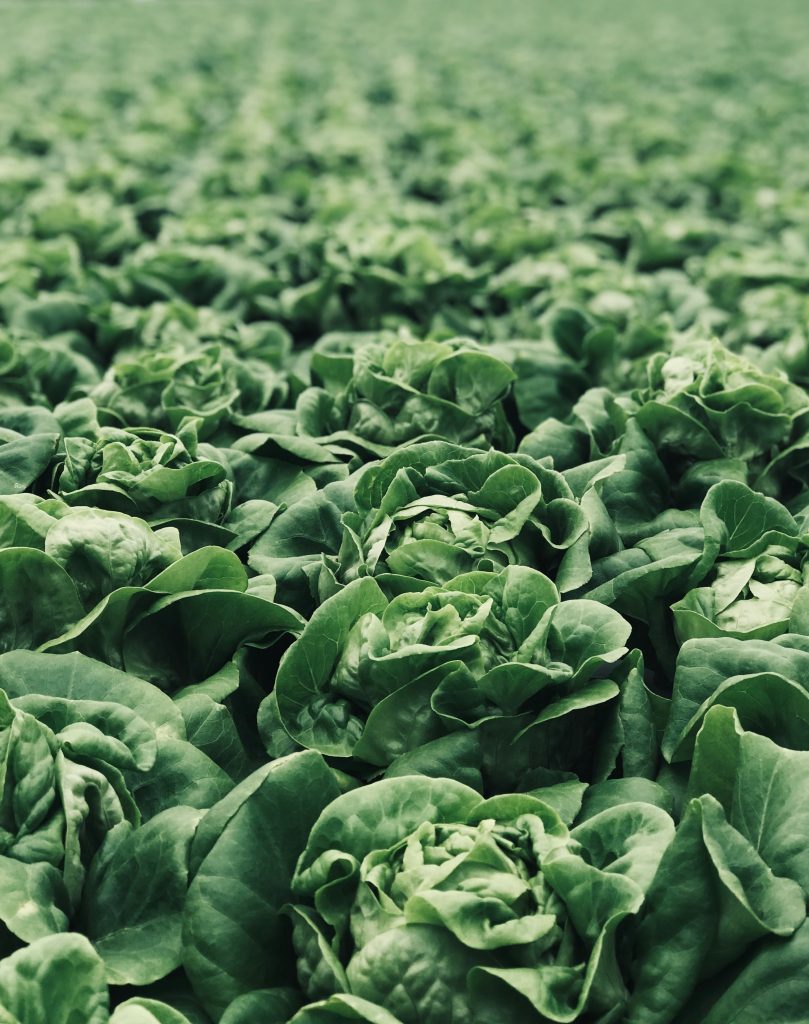
- The largest outbreak was linked to iceburg lettuce from Taylor Farms de Mexico. That outbreak was first linked to Taco Bell in many states, which carried the lettuce from Taylor Farms. Iceberg lettuce was linked to 9,400 cases in 17 states, that were sold to restaurants and retailers.
- The iceberg lettuce in question was recalled and is no longer available.
No one likes their life interrupted by sickness, but GI diseases are the worst, especially when it includes explosive diarrhea!! People with compromised immune systems can be hit much harder by illnesses that others might quickly recover from or fight off easily.
Why Should We Care? Many People Have Compromised Immune Systems:
- Pregnant women
- Children under 5
- People over 65
- People with diabetes, liver or kidney disease, autoimmune diseases, a need for chemo or radiation therapy, organ transplants, HIV or AIDS.
How this Dietitian Handled the Outbreak
I was at ground zero, near Michigan and in Ohio during the height of the outbreak. As someone who has done a lot of research on food safety, I knew enough to be cautious. (Some might even call it a little overcautious!) Before and during our trip, I took Florastor (a yeast-based probiotic supplement, Saccaromyces Boulardi) as a preventive measure, since it’s said to protect the gut lining from parasites.
Eating out daily proved to be less healthy than usual since I mostly skipped salads and cooked veggies are often hard to come by at restaurants.
Questions I Asked at Restaurants:
- Where does your lettuce come from?
- Does it come prepared or do you chop it in house?
It seemed like I surprised servers with my questions– as if there wasn’t a huge parasite outbreak going on or near their state! Some acted annoyed at having to find out. The responses were interesting:
- I don’t really know. Do you want me to ask?
- I don’t know exactly but I know it doesn’t come from any bad places.
- It should be OK because no one has gotten sick yet. (!!)
- Our lettuce is safe.
- Well, I know it doesn’t come from any affected areas. (Hmmm…as matter of fact, if we don’t know all the affected areas!)
- We would never expose our customers to illness! We buy heads of lettuce from Sam’s and wash and chop it ourselves.
Salads I Ate:
- Locally grown lettuceat restaurants. Luckily in Cincinnati and Yellow Springs a few restaurants could name the nearby farm their lettuce came from. (Big shout out to Sunrise Cafe in Yellow Springs and Dewey’s Pizza in Cincinnatti.)Yay!! I could finally eat salad!
- Locally grown lettuce from a Farmer’s Market in Upstate NY. The nice thing about small towns is you can also find farm stands that have freshly picked produce grown right there!
- A kale salad at a fast food restaurant. Kale is a cool weather crop, so more than likely came from cooler climates or grown indoors. Other cool-weather/mild climate greens include arugula, spinach, collard greens, and Swiss chard. Cooler climates in general mean less increase in bacterial and parasite growth.
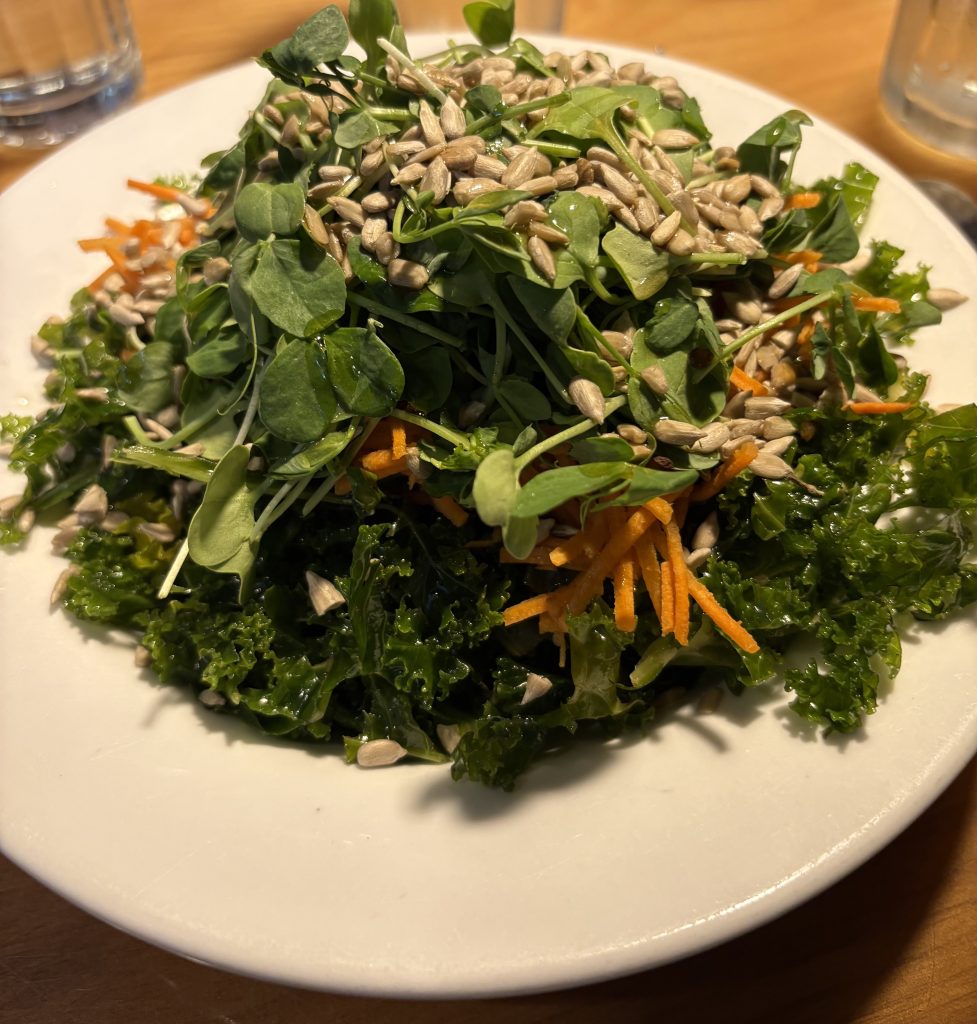
Thank you Sunrise Cafe in Yellow Springs, OH for providing this amazing salad that was locally grown!
Locally grown means less travel time and so less chance of being kept at unsafe temperatures.
Salads I Eat Now
I’ve gotten back to eating salads at home:
- Romaine and leaf letuce heads
- Hydroponically grown butter head lettuce.
- Red and green cabbage.
I still don’t buy raspberries, fresh herbs or green onions, but eat other fruits and veggies. Luckily, we do grow our own parsley, sage, chives and rosemary.
The Bottom Line
- Most of our food supply is still safe, especially when stored and cleaned properly.
- Any produce cooked to a temperature of 158 degrees Fahrenheit/70 degrees Celsius is enough to kill parasites and bacteria.
- There is no need to avoid eating fruits and vegetables. They are the foundation of a healthy diet.
- Importantly, clean your produce thoroughly:
- Start with clean hands, washed with soap for at least 20 seconds.
- Wash produce under cool running water.
- Do not use soap or bleach to rinse produce.
- Scrub firm fruits and veggies with a produce brush.
- Wash produce that you intend to peel. If you cut through a fruit or veggie with a dirty skin, bacteria can be transferred to the inside of the fruit. Some salmonella outbreaks have been caused this way.
- Throw away the outer two or three lettuce and cabbage leaves.
- Once produce has been cut up, like other prepared foods, don’t leave at room temperature for more than 2 hours or 1 hour if the temperature is over 90 degrees Fahrenheit/32 degress Celsius.
- Avoid cross-contamination with raw meat products, but also wash counters with hot soapy water or a weak bleach solution and wash utensils, cutting boards, etc., in the dishwasher.
For More Info
Interview with former CDC and Center for Food Safety and Applied Nutrition staff
Investigation of Multistate Outbreak-FDA
FDA Outbreaks of Foodborne Illness
Leave a Reply